Key takeaways
- One cubic yard of soil covers 54 sq ft at 6 inches and fills a 4 × 8 ft raised bed about 10 inches deep.
- Flower beds need 6–8 inches of soil. Vegetable raised beds need 10–12. A lawn top-dressing of compost is only ¼–½ inch.
- Bulk soil is sold by the cubic yard. Bags run 0.75–2 cu ft, and 27 one-foot bags make a yard.
- Published prices run $30–$50 a yard for garden soil, $20–$55 for compost and $5–$18 for fill dirt, before delivery.
How much soil do I need?
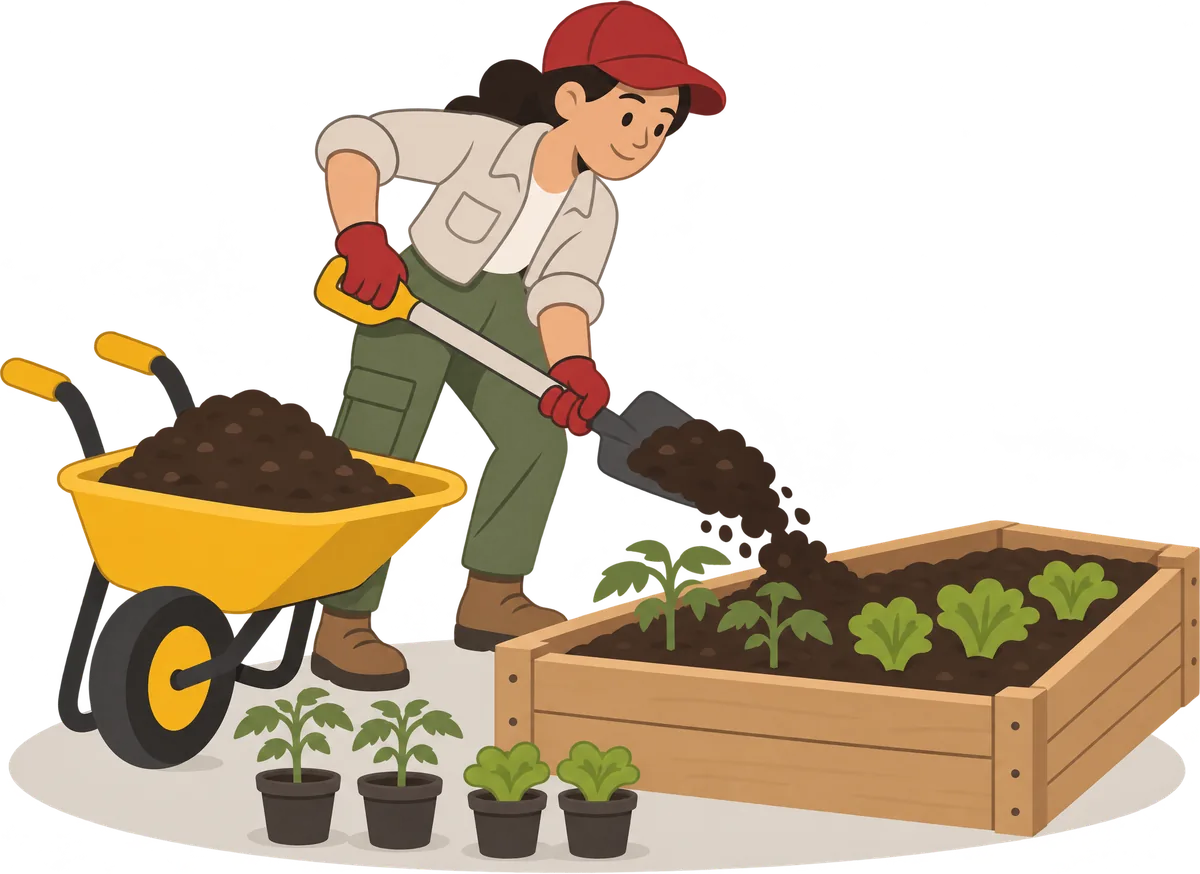
A 4 × 8 ft bed filled 6 inches deep needs 0.62 cubic yards of garden soil with 5% extra. That's about 0.56 tons, or 17 bags of 1 cu ft. Fill the same bed to 12 inches, the usual depth for a vegetable raised bed, and you need 1.24 cubic yards, or 34 bags. At that size, bulk usually starts to make sense, so ask your yard for 1.25 yards and see what their smallest load is.
Here's the same math for the beds people ask about most. No waste is added, so add 5–10% to whatever you order.
| Project | Size and depth | Cubic yards | Tons | 1 cu ft bags |
|---|---|---|---|---|
| Raised bed, small | 4 × 4 ft, 12 in | 0.59 | 0.53 | 16 |
| Raised bed, standard | 4 × 8 ft, 10 in | 0.99 | 0.89 | 27 |
| Raised bed, standard | 4 × 8 ft, 12 in | 1.19 | 1.07 | 32 |
| Raised bed, long | 4 × 12 ft, 12 in | 1.78 | 1.60 | 48 |
| Border along a fence | 12 × 4 ft, 6 in | 0.89 | 0.80 | 24 |
| New garden bed | 10 × 10 ft, 6 in | 1.85 | 1.67 | 50 |
How to measure for soil
- Measure the inside of the bed. A bed that's 4 × 8 ft on the outside and built from 2× lumber is about 3 ft 9 in by 7 ft 9 in inside. That's 29 sq ft instead of 32, roughly 9% less soil. For an in-ground bed, measure the longest and widest points.
- Measure the depth you're adding, not the height of the bed. A new 12-inch bed on bare ground needs the full 12 inches. Topping up an old bed that has sunk might need only 2 or 3.
- Choose the soil type. It changes the weight, not the yards. Compost weighs about two-thirds as much as garden soil for the same volume.
- Set the waste. The default 5% is right for topping up. For a brand-new raised bed, slide it to 10% to cover settling.
How deep should soil be?
| Project | Depth | What to order |
|---|---|---|
| Top-dress a lawn | ¼–½ in | Screened compost |
| Yearly top-up for beds | 1–2 in | Compost |
| New lawn from seed or sod | 4–6 in | Screened topsoil |
| Flower or shrub bed | 6–8 in | Garden soil or planting mix |
| Vegetable raised bed | 10–12 in | Raised-bed mix, or garden soil plus compost |
| Deep-rooted crops (tomatoes, squash) | 12–18 in | Raised-bed mix |
| Fill a low spot or raise the grade | As needed | Fill dirt, then 4–6 in of topsoil on top |
Which soil should you buy?
Yards use these names loosely, so ask what's in the pile. Here's what each one is for.
- Garden soil or planting mix. Topsoil blended with compost. The default for in-ground flower and shrub beds.
- Raised-bed mix. Lighter and higher in compost, so it drains well in a box. Some yards also sell a "landscape mix" with a lot of sand in it, which is fine for shrubs and less good for vegetables.
- Compost. Not a soil on its own. Blend it into beds, or spread it thin on top of beds and lawns.
- Fill dirt. Subsoil for filling holes and building up grade. It compacts well, which is the point, and grows poor plants, which is the catch.
- Topsoil. Screened native soil for lawns and leveling. Use the topsoil calculator for those jobs, because it carries packed and wet weights.
- Potting soil. For containers only. It's sold in bags and costs far too much to fill a raised bed with.
How much does soil cost?
Fill dirt is cheap. Planting soil and compost cost more, and delivery can cost as much as the soil on a small order. Here are the ranges the cost guides published this year.
| What you're buying | Published price | Source |
|---|---|---|
| Garden soil (organic planting soil) | $30–$50per cubic yard | [1] |
| Garden soil with manure | $30–$50per cubic yard | [2] |
| Landscape mix | $25–$50per cubic yard | [1] |
| Organic compost | $20–$55per cubic yard | [1] |
| Leaf compost | $15–$30per cubic yard | [2] |
| Fill dirt | $5–$18per cubic yard | [2] |
| Fill dirt, screened | $12–$20per cubic yard | [3] |
| Bulk soil delivery, up to 15 cu ydSome suppliers charge $65-$100 per hour instead | $50–$150per delivery | [1] |
- [1] Angi, What Is the Cost of Topsoil? [2026 Data], updated Oct 2026.
- [2] Lawn Love, How Much Does Topsoil Cost in 2026?, updated Oct 2026.
- [3] Angi, How Much Does Fill Dirt Cost? [2026 Data], updated Sep 2026.
Prices as published by each source, checked November 2026. They are national ranges, not quotes: your local yard can be well above or below them.
For a new 4 × 8 ft bed filled 12 inches deep with 10% for settling, you need 1.3 cubic yards. At $30–$50 a yard, that's $39–$65 of garden soil. Add a $50–$150 delivery fee and the total is $89–$215. The fee is per trip, not per yard, so two beds cost $78–$130 in soil and still one delivery. Splitting a load with a neighbor works the same way.
For a bed deeper than 12 inches, you can fill the bottom with fill dirt and put garden soil only where the roots are. A 4 × 8 ft bed 24 inches deep holds 2.37 yards. All garden soil is $71–$119. The bottom foot in fill dirt ($6–$21) and the top foot in garden soil ($36–$59) comes to $42–$80.
Bags or a delivery?
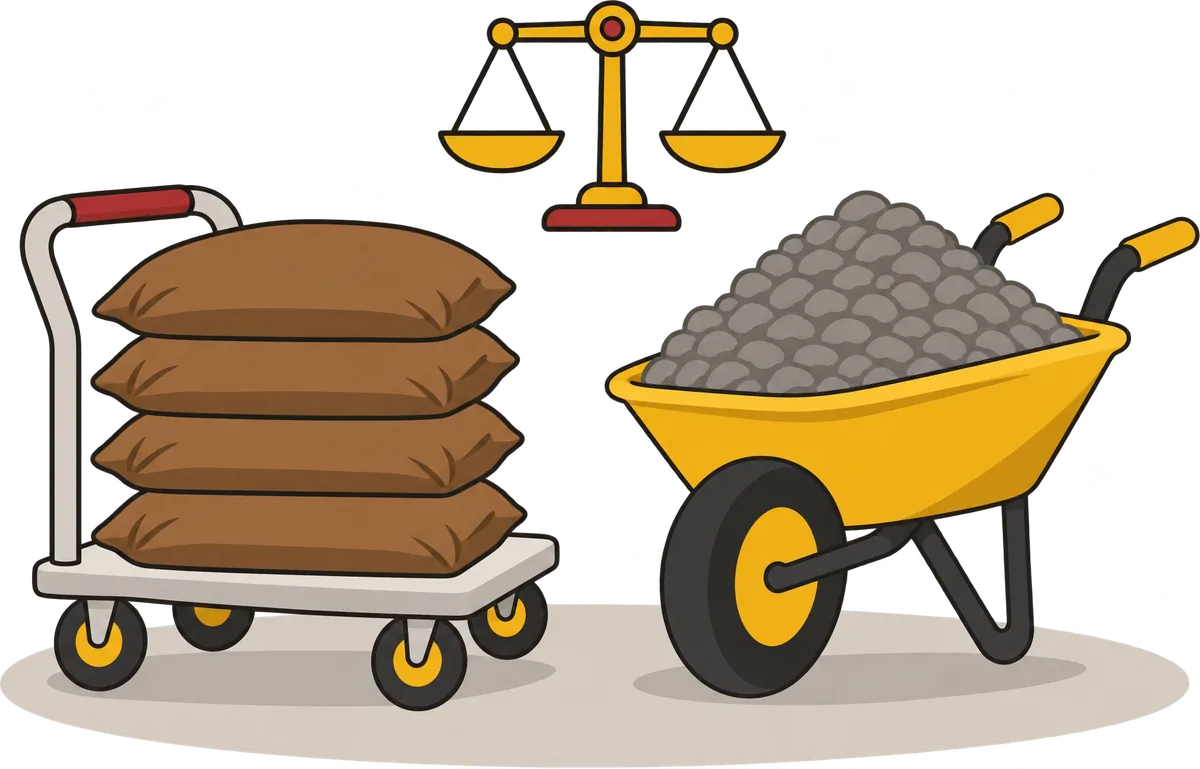
One cubic yard is 27 bags of 1 cu ft. Under about half a yard, which is one small raised bed, bags are easier: no delivery fee, no pile on the driveway. Past one yard, bulk is usually cheaper. To check, type the bag price into the calculator with per bag, then switch to the yard price and add the delivery fee.
Hauling it yourself? A yard of garden soil weighs about 1,800 lb, more when wet (the yards to tons converter has the other soils). That's at or over the payload of many half-ton pickups, so check the sticker on the driver's door frame before you let the loader drop a full bucket in the bed.
The soil formula
- Cubic feet = length (ft) × width (ft) × depth (in) ÷ 12
- Cubic yards = cubic feet ÷ 27
- Tons = cubic yards × 0.9 for garden soil, 1.1 for fill dirt, 0.7 for raised-bed mix, 0.6 for compost
Bags are cubic feet divided by the bag size, rounded up. The weights come from landscape-supply charts listed on the methodology page. If you're putting mulch on top of a new bed, the same length and width work there too, at 2–3 inches. For any other material, the cubic yard calculator does the same volume math.
Soil coverage per cubic yard
A cubic yard spread 1 inch thick covers 324 square feet. Divide 324 by your depth in inches to get the coverage.
Every extra inch of depth shrinks the area. Exact figures in the table below.
- 1 in324 sq ft
- 2 in162 sq ft
- 4 in81 sq ft
- 6 in54 sq ft
| Depth | 1 cubic yard covers | Yards per 100 sq ft | Bags (1 cu ft) per 100 sq ft |
|---|---|---|---|
| 1 in | 324 sq ft | 0.31 yd³ | 9 bags |
| 2 in | 162 sq ft | 0.62 yd³ | 17 bags |
| 4 in | 81 sq ft | 1.23 yd³ | 34 bags |
| 6 in | 54 sq ft | 1.85 yd³ | 50 bags |
| 8 in | 41 sq ft | 2.47 yd³ | 67 bags |
| 10 in | 32 sq ft | 3.09 yd³ | 84 bags |
| 12 in | 27 sq ft | 3.70 yd³ | 100 bags |