Key takeaways
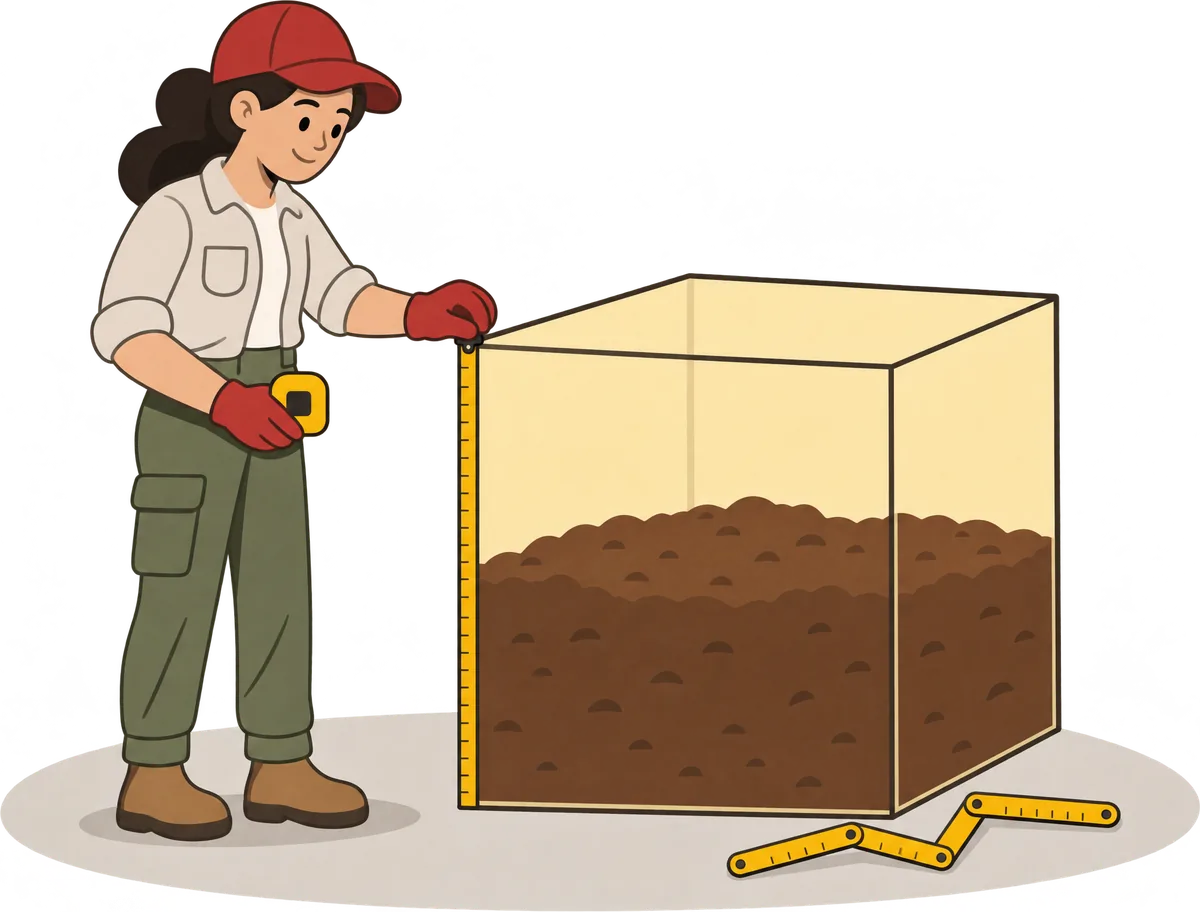
- A cubic yard is 27 cubic feet: a box 3 ft long, 3 ft wide and 3 ft tall.
- Spread out, one yard covers 324 sq ft at 1 inch deep, 108 sq ft at 3 inches and 81 sq ft at 4 inches.
- Bulk mulch, soil and concrete are sold by the cubic yard. Gravel and sand are often sold by the ton, and bags by the cubic foot.
- Published bulk prices for gravel, mulch and topsoil run about $10–$100 a cubic yard, before delivery.
How many cubic yards do I need?
A 12 × 8 ft area filled 3 inches deep is 24 cubic feet, or 0.89 cubic yards. Order 1 yard. At 2 inches the same area takes 0.59 yards, and at 4 inches it takes 1.19. That spread is why the depth is the number to get right.
This calculator starts with no waste added, because it doesn't know what you're spreading. For mulch or soil, slide it to 5%. For gravel or anything that compacts, use 10%. The table below has no waste added either.
| Project | Size and depth | Cubic yards | 2 cu ft bags |
|---|---|---|---|
| Mulch around a garden bed | 10 × 10 ft, 3 in | 0.93 | 13 |
| Raised bed, filled | 8 × 4 ft, 12 in | 1.19 | 16 |
| Gravel side path | 30 × 3 ft, 3 in | 0.83 | 12 |
| Patio base | 12 × 12 ft, 4 in | 1.78 | 24 |
| Driveway top layer | 40 × 10 ft, 3 in | 3.70 | 50 |
| Topsoil for a new lawn | 50 × 20 ft, 4 in | 12.35 | 167 |
How to measure for cubic yards
- Measure length and width in feet. Turn leftover inches into a decimal: 10 ft 6 in is 10.5 ft. Or skip the math and set that field's unit to inches.
- Measure depth in inches, in three or four spots. Ground is rarely flat. Average the readings rather than trusting the deepest one.
- Break odd shapes into simple ones. An L-shaped bed is two rectangles. A round bed takes its diameter (a 10 ft circle is 78.5 sq ft). A wedge in a corner is a triangle: half the base times the height. Add each piece with Add another area and the calculator totals them.
- Choose a material if you want weight. Leave it on Volume only if all you need is yards.
What does a cubic yard look like?
Picture a box 3 feet on every side. Kitchen counters are 36 inches high, so it stands as tall as your counter and reaches 3 ft across and 3 ft back. That's a good bit bigger than a washing machine. Most people guess a yard is smaller than it is, then watch the delivery and wonder where it will all go.
In wheelbarrow terms, a yard is four and a half loads in a 6 cu ft contractor barrow filled level. With gravel or wet soil you won't fill the barrow that full, so plan on more trips. It's also 13.5 of the 2 cu ft mulch bags sold at garden centers.
Cubic feet, cubic yards and cubic meters
Bags are labeled in cubic feet, bulk is sold in cubic yards, and some plans and imported products use cubic meters. These are the conversions you'll use.
| Unit | Equals |
|---|---|
| 1 cubic yard | 27 cubic feet · 46,656 cubic inches · 0.765 m³ · about 202 US gallons |
| 1 cubic foot | 0.037 cubic yards · 1,728 cubic inches · 28.3 liters · 7.48 US gallons |
| 1 cubic meter | 1.308 cubic yards · 35.3 cubic feet |
| 1 cubic yard at 1 inch deep | Covers 324 sq ft |
A cubic meter is about 30% bigger than a cubic yard, so the same pile is a smaller number in meters. Set any field to meters or centimeters and the calculator shows both.
How deep should the material be?
| Project | Depth | 1 yard covers |
|---|---|---|
| Paver bedding sand | 1 in | 324 sq ft |
| Topdressing a lawn with soil | 2 in | 162 sq ft |
| Mulch around shrubs and trees | 3 in | 108 sq ft |
| Gravel path or bed | 2–3 in | 108–162 sq ft |
| Topsoil for a new lawn | 4 in | 81 sq ft |
| Concrete patio or walk | 4 in | 81 sq ft |
| Driveway base, compacted | 4–6 in | 54–81 sq ft |
| Raised garden bed | 12 in | 27 sq ft |
Which material setting should you pick?
The picker only changes the weight and the unit it highlights. The yards are the same whatever you choose.
- Volume only. Yards, cubic feet and bags, no weight. Use it for anything not on the list.
- Gravel or crushed stone at 1.4 tons per yard. Yards usually price it by the ton. The gravel calculator has pea gravel, crusher run and the rest.
- Mulch at 0.3 tons per yard. Sold by the yard, or in 2 cu ft bags. See the mulch calculator.
- Topsoil at 1.05 tons per yard, loose and dry. Sold by the yard. The topsoil calculator covers packed and wet soil, and the soil calculator covers fill dirt and compost.
- Sand at 1.35 tons per yard, dry. Often sold by the ton. See the sand calculator.
- Concrete at about 2 tons per yard, mixed.
Concrete is ordered by the cubic yard too. Run the slab size through the calculator, then add 5–10%, because forms bow and the ground under them is never perfectly flat. Running short mid-pour is far worse than a little left in the truck. For small jobs, an 80 lb bag of premix makes about 0.6 cubic feet, so a full yard would take 45 bags.
How much does a cubic yard cost?
A yard costs whatever the material in it costs, so the range is wide. Here's what the major cost guides published this year for one cubic yard of the common bulk materials.
| What you're buying | Published price | Source |
|---|---|---|
| Gravel or crushed stone, bulk | $15–$75per cubic yard | [1] |
| Mulch, bulk (materials only) | $25–$100per cubic yard | [2] |
| Topsoil, bulk | $10–$55per cubic yard | [3] |
| Fill dirt | $5–$18per cubic yard | [4] |
| Sand, bulkPlus a separate delivery fee | $30–$70per cubic yard | [5] |
| River rock | $50–$160per cubic yard | [6] |
| Bulk delivery, topsoil (up to 15 cu yd)Some suppliers charge $65-$100 per hour instead | $50–$150per delivery | [3] |
- [1] HomeGuide, How Much Does Crushed Stone or Gravel Cost? (2026), updated Dec 2025.
- [2] HomeGuide, How Much Does Mulch Cost? (2026), updated Apr 2025.
- [3] Angi, What Is the Cost of Topsoil? [2026 Data], updated Oct 2026.
- [4] Lawn Love, How Much Does Topsoil Cost in 2026?, updated Oct 2026.
- [5] HomeGuide, How Much Does Sand Delivery Cost? (2026), updated Jun 2026.
- [6] HomeGuide, How Much Do Landscaping River Rocks and Stones Cost? (2026), updated Dec 2025.
Prices as published by each source, checked November 2026. They are national ranges, not quotes: your local yard can be well above or below them.
For the 12 × 8 ft example above, you'd order 1 yard. That's $15–$75 of gravel, $25–$100 of mulch or $10–$55 of topsoil. A $50–$150 delivery fee can easily cost more than the material on an order that small, which is why small jobs often go to bags or a borrowed truck, and why it pays to combine orders.
Ordering by the yard
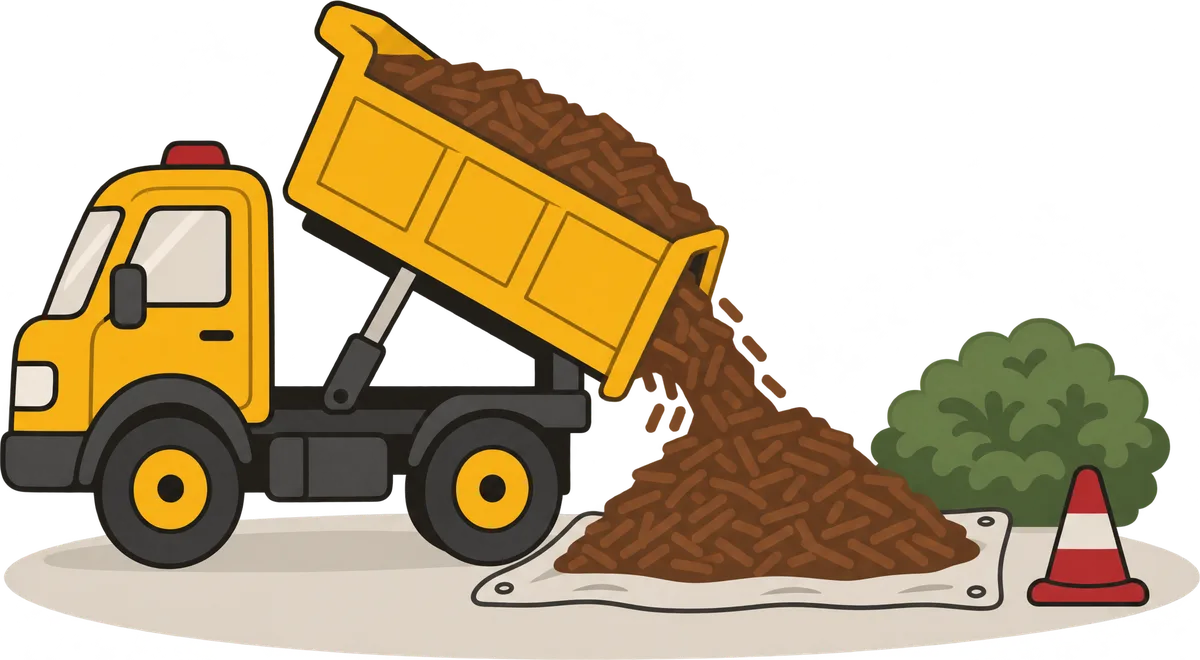
Many yards load in half-yard steps, and some set a minimum. HomeGuide's rock guide mentions minimums of 1–3 cubic yards for delivery. Round up to the next step the yard sells, since running a quarter yard short means paying for a second trip.
Tell the yard what the material is for. A yard of screened topsoil and a yard of fill dirt are the same volume and very different products. If you're hauling it yourself, check your truck's payload against the weight per yard before you drive in.
Bags or bulk?
Divide 27 by the bag size to see how many bags make a yard. The common sizes:
| Bag size | Usually holds | Bags per cubic yard |
|---|---|---|
| 0.5 cu ft | Stone, gravel, sand | 54 |
| 0.75 cu ft | Topsoil, garden soil | 36 |
| 1 cu ft | Soil, compost | 27 |
| 1.5 cu ft | Soil, mulch | 18 |
| 2 cu ft | Mulch | 13.5 |
| 3 cu ft | Large mulch, bark | 9 |
Bags make sense below about half a yard, or where a truck can't reach. Past that, bulk is almost always cheaper even with the delivery fee. Change the bag size under Bag size and your price on the calculator to see your count.
The cubic yard formula
- Area in square feet: length × width for a rectangle, 0.785 × diameter² for a circle, ½ × base × height for a triangle
- Cubic feet = area × depth (in) ÷ 12
- Cubic yards = cubic feet ÷ 27
For weight, multiply cubic yards by the material's density in tons per yard. The densities and where they come from are on the methodology page.
Cubic yard coverage
Spread one inch thick, a cubic yard covers 324 square feet. Divide 324 by your depth in inches for anything not in the table.
Every extra inch of depth shrinks the area. Exact figures in the table below.
- 1 in324 sq ft
- 2 in162 sq ft
- 3 in108 sq ft
- 4 in81 sq ft
- 6 in54 sq ft
| Depth | 1 cubic yard covers | Yards per 100 sq ft |
|---|---|---|
| 1 in | 324 sq ft | 0.31 yd³ |
| 2 in | 162 sq ft | 0.62 yd³ |
| 3 in | 108 sq ft | 0.93 yd³ |
| 4 in | 81 sq ft | 1.23 yd³ |
| 6 in | 54 sq ft | 1.85 yd³ |
| 8 in | 41 sq ft | 2.47 yd³ |
| 12 in | 27 sq ft | 3.70 yd³ |